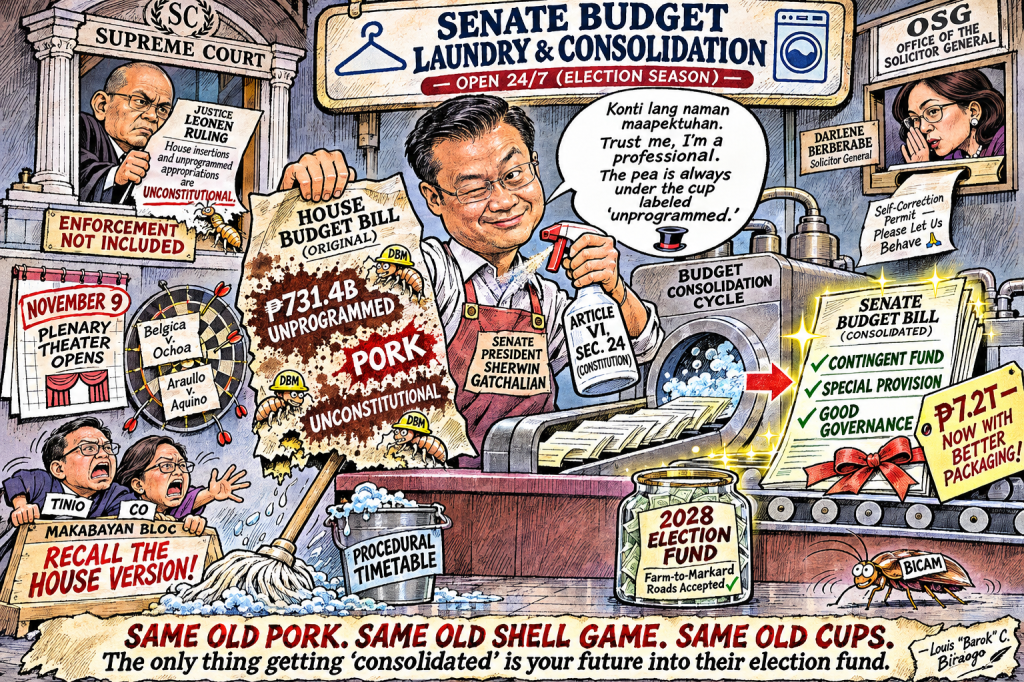
Inside the ₱7.2-Trillion Standoff: Why the Senate President’s ‘Self-Correction’ Promise Smells Like the Same Old Pork, Just With Better Packaging
By Louis ‘Barok’ C. Biraogo — October 29, 2026
LET’S cut through the legislative fog for a moment. Senate President Sherwin Gatchalian looked the Makabayan bloc in the eye this week and essentially said: “We’ll fix the unconstitutional budget ourselves, thanks. No need to bother the House. We’ve got this.”
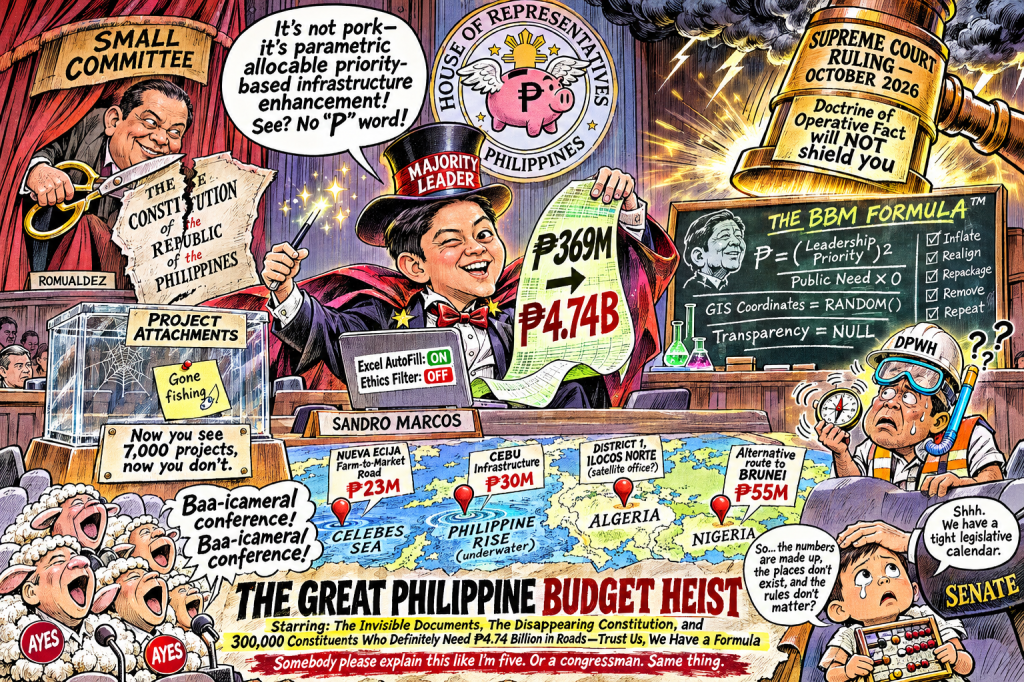
It is a statement of such breathtaking procedural confidence that one almost admires the audacity. The Supreme Court—that pesky third branch that keeps insisting on reading the Constitution—had just gutted key provisions of the 2024, 2025, and 2026 budgets for violating Article VI, Section 25(1). The High Court, in a ruling penned by Senior Associate Justice Marvic Leonen, found that Congress had effectively been running a fiscal shell game, inflating unprogrammed appropriations by ₱449.5 billion in 2024 and slipping ₱17.99 billion into a road fund in 2025 like a pickpocket with a public works fetish.
And Gatchalian’s response? “Konti lang naman maapektuhan.” Only a little bit will be affected. We’ll just tidy it up during consolidation.
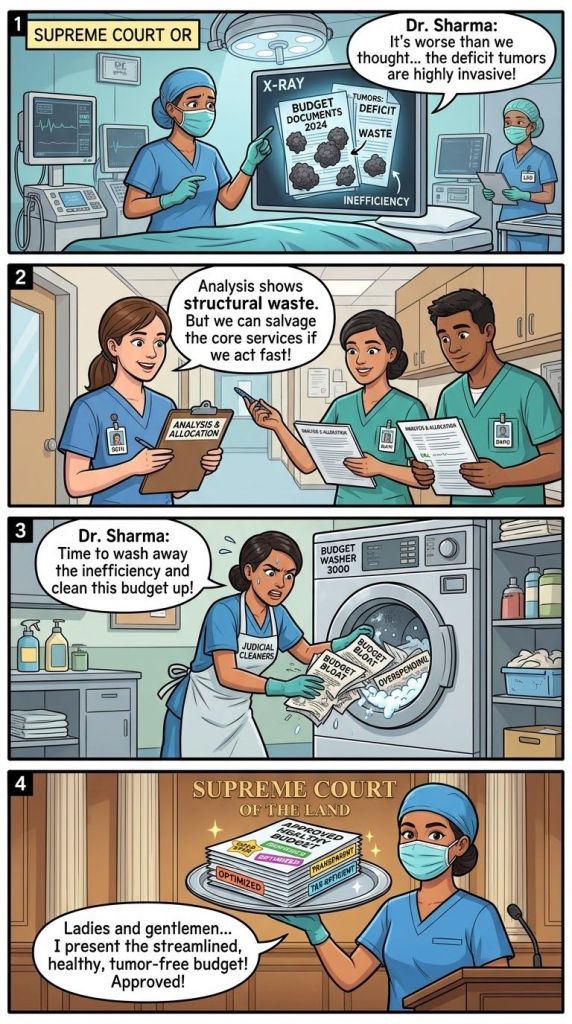
This is the legislative equivalent of a homeowner discovering a termite infestation and deciding to handle it with a can of spray paint and a reassuring nod. The Senate President insists the Senate can amend the House version without a recall, citing Article VI, Section 24, which allows the Senate to propose amendments. He’s not wrong on the bare constitutional text. But the gap between can and will is where the ₱7.2-trillion budget lives, and it is a chasm wide enough to swallow a reenacted budget and every pet project nestled inside it.
The Makabayan bloc—now down to two lonely seats in the House, ACT Teachers’ Antonio Tinio and Kabataan’s Renee Co—has been screaming into the void that the House-approved General Appropriations Bill contains provisions similar to those the Supreme Court just invalidated. Tinio put it bluntly: “The House must fix its own mess.” That is a reasonable demand. It is also a demand that the House leadership, busy taking its cues from the Office of the Solicitor General’s (OSG) planned motion for reconsideration, has shown zero interest in entertaining.
Let’s pause on the OSG’s role here, because it is the quiet tell in this whole drama. Solicitor General Darlene Berberabe has signaled that the executive branch wants the Supreme Court to let Congress and the President “self-correct.” Translation: Please, Your Honors, let the political branches handle this. We promise to behave. This is the same executive branch whose Department of Budget and Management (DBM) is now scrambling to figure out which 2026 unprogrammed funds it can still touch after the ruling. The DBM says it will comply “without prejudice to the government’s right to seek reconsideration.” That is bureaucratic for “we’ll follow the rules unless we can convince the Court to change them.”
The deeper rot here is structural, and it predates Gatchalian’s consolidation timetable by decades. The Supreme Court’s ruling was not an isolated doctrinal spasm. It was the culmination of a pattern that began with Belgica v. Ochoa in 2013, when the Court struck down the Priority Development Assistance Fund—the original pork barrel—and continued through Araullo v. Aquino in 2014, which invalidated the Disbursement Acceleration Program’s creative accounting. Each time, the Court drew a line. Each time, Congress found a new way to color outside it. Unprogrammed appropriations became the vehicle of choice: a standby pool that could be inflated during bicameral conference, functionally converting programmed, line-item spending into a discretionary slush fund that the Executive could release later, at its pleasure, when “savings” or “excess revenues” materialized.
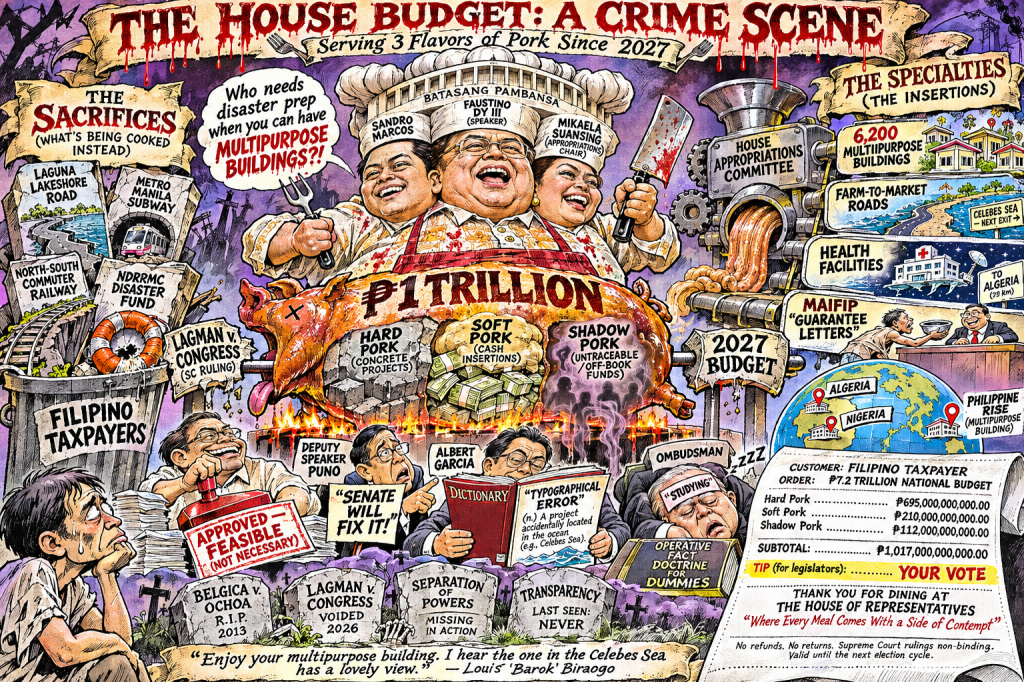
The numbers tell the story. The 2024 budget’s unprogrammed appropriations ballooned from roughly ₱282 billion in the President’s proposal to ₱731.4 billion in the enacted General Appropriations Act (GAA). That is not a rounding error. That is a half-trillion-peso transfer of fiscal decision-making from the legislative process—where it is supposed to be transparent and itemized—to the implementation phase, where it is neither. And it happened, as VERA Files’ Florencio Abad noted, during the final stages of budget legislation, often in the bicameral conference committee, that notorious “third chamber” where records are scant and explanations are scarcer.
Now Gatchalian wants us to believe that the Senate will clean this up in consolidation, before plenary debates begin November 9. He has promised to adhere to the President’s spending ceiling, remove unconstitutional special provisions, and clarify unprogrammed appropriations rules with the Solicitor General. These are fine words. They are also exactly the kind of assurances that have preceded every previous budget scandal. The Senate will correct it. The bicam will reconcile it. The DBM will implement it faithfully. And somewhere along the line, the ₱30-billion Local Government Support Fund will find its way to “good governance” projects that just happen to align with the political interests of whoever controls the release.
Gatchalian dismissed allegations that the 2027 budget is an “election budget” by noting that the elections aren’t until 2028. This is either charmingly naive or deliberately obtuse. The 2027 budget is the last full-year appropriations bill before the 2028 presidential and midterm elections. It is the budget that funds the infrastructure, the ayuda, the medical assistance, and the farm-to-market roads that incumbents will cut ribbons for while campaigning. The House version already contains ₱116 billion in amendments, including ₱10 billion for “Presidential Assistance to Farmers and Fisherfolk” and nearly ₱5 billion for farm-to-market roads. These may be legitimate priorities. They are also, in an election cycle, political currency. The Supreme Court’s ruling did not touch this reality. It merely said: you cannot pretend the money isn’t there by shuffling it into a standby fund.
The Makabayan bloc’s demand for a recall is procedurally awkward. Gatchalian and Senator Ping Lacson are correct that the Constitution does not mandate it, and Lacson’s warning about a reenacted budget is not trivial. A reenacted budget freezes spending at prior-year levels, lumps everything together, and strips out new itemizations. For a government trying to fund El Niño preparedness and agricultural support, that is a real cost. But the Makabayan bloc is not arguing procedure for procedure’s sake. It is arguing that the House version is tainted at the source, and that asking the Senate to clean it up is asking the arsonist’s neighbor to put out the fire while the arsonist keeps the matches.
There is a version of this story in which Gatchalian is the pragmatist hero, threading the needle between constitutional compliance and legislative deadlines. But that version requires us to believe that the Senate, which has historically been a co-conspirator in the bicameral expansion of unprogrammed funds, will now suddenly become a model of fiscal rectitude because a Court ruling made it inconvenient not to be. It requires us to believe that the same chamber that produced the 2024 and 2025 budgets—the ones the Court just voided—will voluntarily dismantle the mechanisms that made those budgets politically useful.
I do not believe it. And neither should you.
The Supreme Court’s ruling, for all its doctrinal rigor, left the enforcement mechanism vague. It said unprogrammed appropriations are not unconstitutional per se, but it imposed guardrails: no lump sums, clear differentiation between programmed and unprogrammed, prioritization standards, and a narrow contingent nature. It did not say who checks whether those guardrails are respected before enactment. It did not mandate a pre-enactment review. It left the political branches to “self-correct,” which is precisely what the OSG is now asking the Court to formalize.
This is the vacuum into which Gatchalian’s consolidation process will step. If the Senate produces a final budget that looks clean on paper but preserves the same discretionary mechanics under new labels, who will stop it? The Makabayan bloc can file another petition. The Court can rule again, years later, after the funds have been released and the projects have been inaugurated and the beneficiaries have acted in good faith, triggering the operative fact doctrine that already shielded the 2024 and 2025 spending from reversal. By then, the political cycle will have moved on.
Gatchalian says he doesn’t foresee “major corrections” in the 2027 budget. That is the most honest thing he has said. The corrections will be minor. They will be technical. They will rename a fund here, adjust a special provision there, and produce a document that a sufficiently motivated lawyer could defend before the Supreme Court. And the ₱7.2-trillion machine will roll on, with its unprogrammed slush pool intact, waiting for the next election cycle to be tapped for “urgent” priorities that no one voted on in plenary.
The Makabayan bloc will lose this fight. It has two seats and a moral argument against a Senate President with a timetable and the Solicitor General’s sympathetic ear. But losing is not the same as being wrong. Tinio and Co are right that the House should fix its own mess. They are right that the 2027 budget contains the seeds of the same constitutional violations the Court just condemned. And they are right that a Senate “consolidation” is not a substitute for accountability at the point of origination.
Gatchalian’s approach is legally defensible. It is also institutionally cynical. The Senate will not save us from the House’s excesses. It will launder them through a committee process and a bicameral conference and send them to the President’s desk with a bow on top. The Supreme Court has drawn a line. The question now is whether anyone in the legislative branch actually intends to stay behind it, or whether the line is just another obstacle to be routed around on the way to 2028.
Louis ‘Barok’ C Biraogo is the author of the Kweba ni Barok blog. He has covered Philippine budget politics long enough to recognize a shell game when he sees one, and long enough to know that the pea is always under the cup labeled “unprogrammed.”
Key Citations
A. Legal & Official Sources
- Araullo v. Aquino III. G.R. No. 209287, 1 July 2014. Lawphil, lawphil.net/judjuris/juri2014/jul2014/gr_209287_2014.html.
- Belgica v. Ochoa. G.R. No. 208566, 19 Nov. 2013. Lawphil, lawphil.net/judjuris/juri2013/nov2013/gr_208566_2013.html.
- Philippines. “The 1987 Constitution of the Republic of the Philippines – Article VI.” Official Gazette, http://www.officialgazette.gov.ph/constitutions/the-1987-constitution-of-the-republic-of-the-philippines/the-1987-constitution-of-the-republic-of-the-philippines-article-vi/.
- Supreme Court of the Philippines. “SC Holds Unprogrammed Appropriations Subject to Guidelines, Voids Congressional Increases in 2024 and 2025 Budgets.” Supreme Court of the Philippines, Oct. 2026, sc.judiciary.gov.ph/sc-holds-unprogrammed-appropriations-subject-to-guidelines-voids-congressional-increases-in-2024-and-2025-budgets/.
B. News Reports
- Bacelonia, Wilnard. “Senate to Correct 2027 Budget Without House Recall.” Philippine News Agency, 23 Oct. 2026, http://www.pna.gov.ph/article/senate-to-correct-2027-budget-without-house-recall.
- ₱9 Billion in ‘Savings’? DILG’s Fire Truck Deal Smells Like Smoke

- ₱8B BBM Pork: CCTV for Every Captain’s Kumpare?

- ₱8.9 Billion, 331 Ghost Police Stations: The TIKAS Scandal Explained

- ₱8.4 Billion, 42,000 Barangays, 1 Election: The “Bawat Barangay Makikinabang” Vote-Buying Masterclass

- ₱75 Million Heist: Cops Gone Full Bandit

- ₱63 to the Dollar: The Only Thing Falling Faster Than the Peso Is the Government’s Credibility

- ₱6.77B Ghost Haunts Duterte: RTC Dismisses Mans Carpio’s Desperate Plea
- ₱6.77 Billion and Zero Cash: The Sara Duterte SALN Math That Doesn’t Add Up

- ₱6.7-Trillion Temptation: The Great Pork Zombie Revival and the “Collegial” Vote-Buying Circus

- ₱58.53B, Zero Receipts: The LGSF Pork Barrel Nobody Wants to Name
- ₱53 Million Man Tells ₱695-a-Day Workers to Stop Being ‘Mayabang’: The Audacity of BSP’s Remolona
- ₱4.4 Billion and a Witness Who Can’t Explain It: The Duterte Impeachment’s Most Expensive Non-Answer



Leave a Reply